Sensory Anchors: Regulating Your Nervous System Through Tactile Tools
Last week, we looked at how creating daily practices that feel predictable and reliable can support your nervous system. When your body knows what to expect, it finds safety in rhythm. That structure is powerful, but life doesn’t always follow a script. Stress shows up mid-day, when emails pile up or your schedule gets thrown off. This is where sensory anchors step in for mid-day nervous system regulation.
Grounded in the Small Things
Most wellness guides will tell you to reach for deep breathing, meditation, or yoga in a moment of stress. And it’s true, breathwork can calm your body in remarkable ways. But here’s the thing: sometimes, even after a round of breathwork, mental clarity doesn’t automatically follow.
That’s because a single practice isn’t enough for a complex nervous system. The truth is, you can’t simply think your way out of a physiological stress response. Your brain’s “fight or flight” pathways are already running on autopilot, and a pep talk or a list of pros and cons just isn’t going to hit the brakes.
While breathwork helps your body reset, a sensory anchor gives your mind something tangible to land on. This works because our sense of touch is directly linked to the part of the brain that can interrupt anxiety and overthinking. By engaging your senses, you’re sending a direct signal to your nervous system that you are safe and in control.

Finding Your Perfect Tool for the Job
The most effective sensory anchor is something that inherently feels good to you. While a smooth stone or stress ball works well, using an intentional tool you already carry, like your planner, integrates the practice seamlessly into your day. It becomes a secret weapon for your nervous system, disguised as an everyday object. And when it comes to staying grounded during a hectic day, these are the top picks we personally reach for.

Exotic Leather Folio | Ponyhair
There’s something almost meditative about running my fingers across the cover. It’s so smoothly textured that we sometimes think about giving it a quick fluff with a wide-tooth comb! But honestly, the tactile experience alone is enough to recollect.

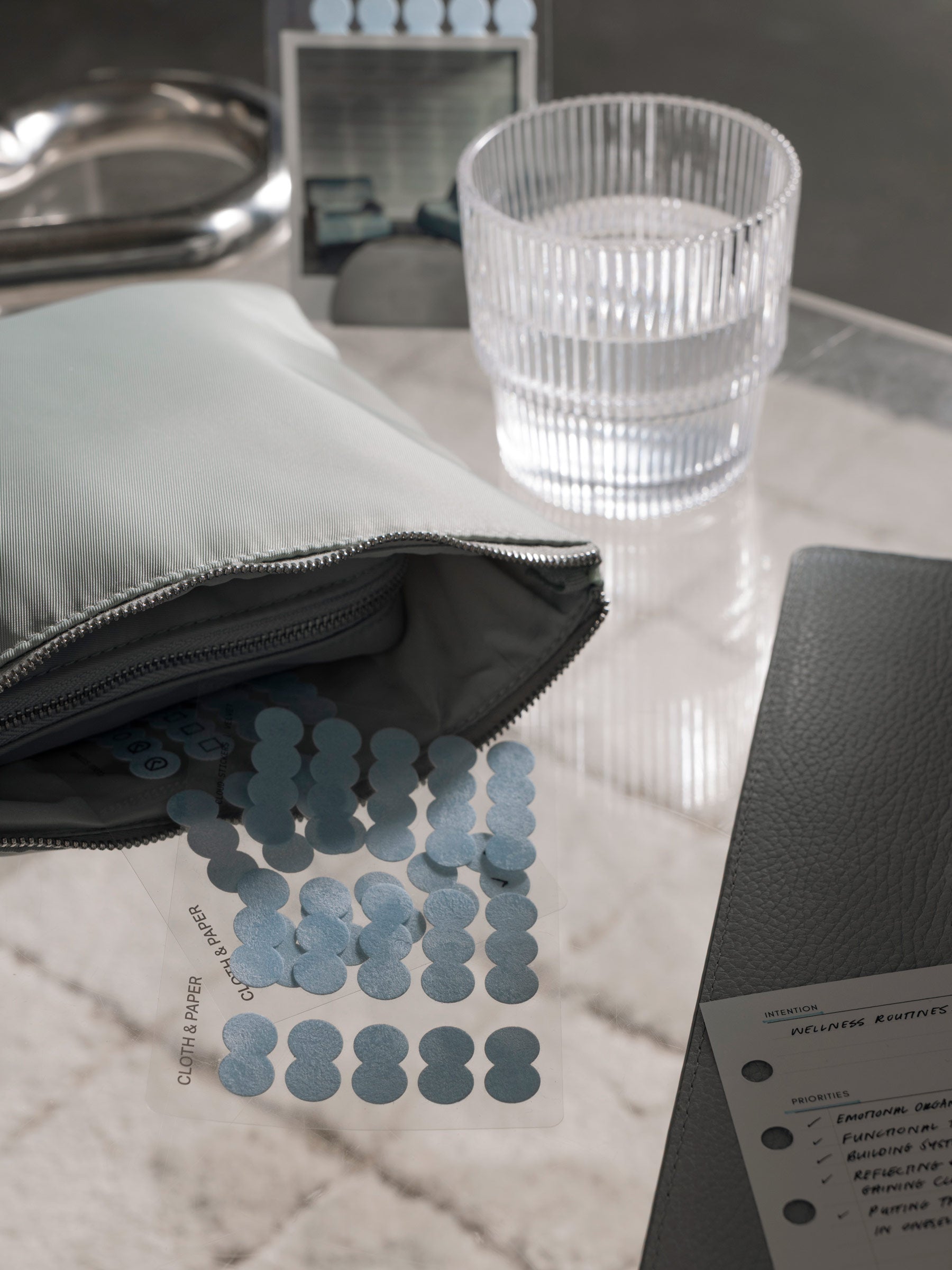
Raised Sticker Set
The raised, glossy texture is incredibly satisfying to run your fingers over; it’s a perfect five-second focus reset during back-to-back calls. Fair warning though: just try not to use them all at once.

Leather eClipse Bookmark
We offer two textures for a reason: some of us swear by the contoured grip, while others love the smooth version. It’s that perfect little ritual—slipping it into a new page before you start writing. It gives you a second to breathe and center yourself. Simple, but it works.

Sticky Note Swatches
The texture is subtle but so cool under a pen, and they can be used for little pep talks or urgent notes to ourselves. The patterns don’t smudge ink, which is a major plus. They’re our go-to for a quick, creative moment of pause.

Exotic Spiral Notebook | A5 (Linen)
The linen cover is structured and professional, but it also has this great, tactile feel that grounds you. It’s the notebook equivalent of putting on a blazer—it somehow makes everything you write in it feel more intentional.
Sensory anchors aren’t limited to touch, but also the way your environment looks and feels has a direct impact on your nervous system. A clear desk with uncluttered zones, or even the white space on a page can act like a pause button for the mind. When your eyes can settle on simplicity instead of clutter, your body follows suit, releasing tension. A spacious planner spread, a balanced design, or even an intentional arrangement of objects around you can signal calm as powerfully as a deep breath.
Making It a Habit
The key to using your sensory anchor effectively is to make it a conscious habit. Don’t wait until you’re in a full-blown panic. The more you practice, the more your nervous system will learn to associate that touch with calm.
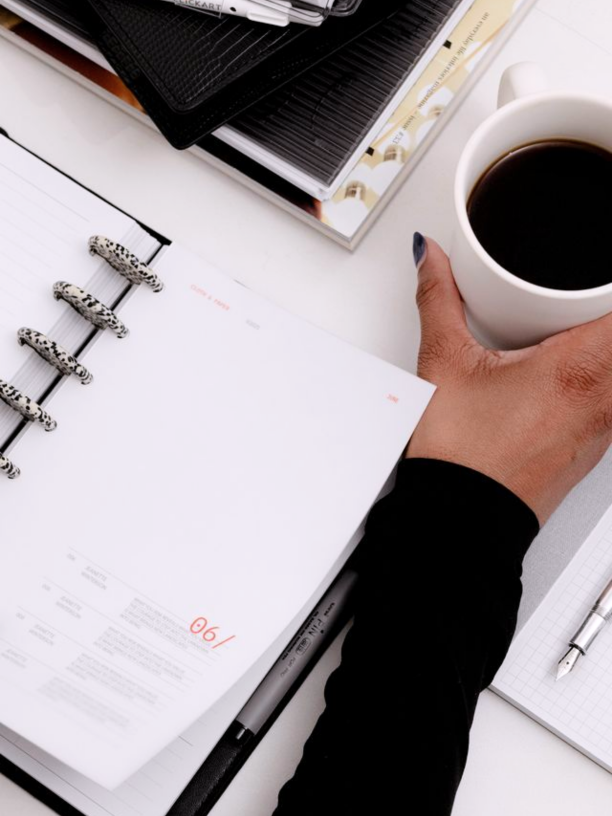
Here’s how to use your planner as a sensory anchor whenever you need a pause:
- Acknowledge the feeling: As you sit down with your planner, simply notice any stress bubbling up. Your shoulders or jaws might be tense, so just take a moment to be aware of what's physically going on.
-
Connect with your anchor: Instead of just starting to write, place your hands on the tool. Let the simple act of touching or opening your planner be your first step back to yourself.
You can also describe it using just three words. Is your leather bookmark cool, smooth, grounding? Is the linen cover woven, sturdy, calming? This simple act focuses your mind completely on the present sensation. - Breathe with purpose: As you focus on these sensations, take a slow, deep breath in through your nose, letting your belly expand. Hold for a moment, and then release it slowly through your mouth, as if you’re blowing out a candle.
Continue this cycle of focused touch and mindful steps until you feel your body and mind start to settle. This isn't about getting rid of the stress entirely, but about giving yourself a brief moment to find clarity before you move forward with your tasks.

From Planner to Practice
When it comes to regulating your nervous system, there’s no single magic solution. It’s about building a toolkit that works in layers.
Think of it this way: your reliable daily routines are the foundation—the strong, steady structure that keeps everything grounded. Breathwork and mindful awareness are the furniture and art, creating an atmosphere of calm inside that structure.
And a sensory anchor is like having a sturdy front door key. It’s small, it’s always with you, and it’s a quick, reliable way to get back to a place of safety and stability.
So as you move through your day, don’t underestimate the power of small things. Pairing the big-picture consistency of a routine with the immediate grounding of a sensory anchor creates a dynamic, resilient system for staying present. Afterall, it’s all about empowering yourself to find your way back to calm, one purposeful action at a time.
Your anchors may be as unique as your story. Which tools help you return to calm?
Share your favorites in the comments or tag us @clothandpaper to give us a peek at the tools that keep you grounded.



Dejar un comentario
Este sitio está protegido por hCaptcha y se aplican la Política de privacidad de hCaptcha y los Términos del servicio.