How to Create a Dopamine Menu for the Days Your Brain Needs a Snack
Dopamine has become a trendy word lately, but its existence is not new. Your brain and your body thrive off of it. No matter what you do, your brain is going to ask for dopamine and seek it out.
The question is whether you want to be the one choosing it, or whether you want to wake up 47 minutes later on TikTok learning about someone else’s divorce, a countertop ice maker, and a niche workplace drama you are now emotionally invested in.
A dopamine menu gives you a list of better options before your brain starts freelancing.

What is a Dopamine Menu?
A dopamine menu is a list of activities that can help you reset, refocus, or feel good in a way that matches your current time, energy, and attention level.
Instead of treating all breaks the same, you organize them like a menu:
Appetizers are quick, low-effort boosts.
Entrées are longer, more restorative breaks.
Sides are things you can pair with boring or repetitive tasks.
Desserts are the fun-but-best-in-moderation options.
It is especially helpful if you have ADHD, decision fatigue, or a brain that likes to turn every simple task into a group project with itself.
Why make it on paper?
You can absolutely make a dopamine menu digitally. No one is coming to confiscate your Notes app.
But there is something about making it by hand that turns the whole thing into part of the reset. Writing it down, placing sticky notes, choosing a layout, using a pen you love the feel of — it slows the process down enough to make it feel intentional.
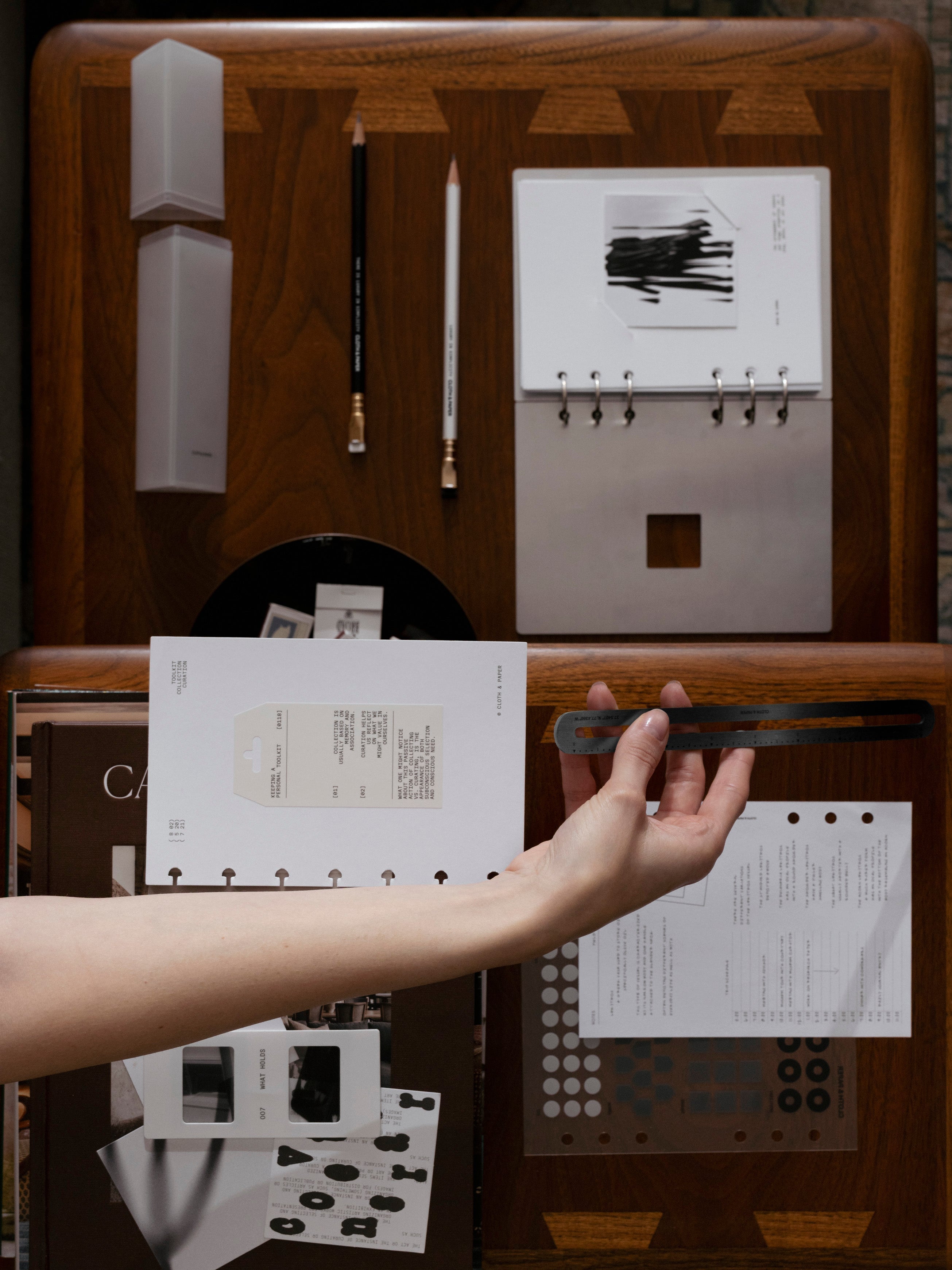
Some of my favorite menu-building tools include::
- Dot Grid Notebook
- Transparent Sticky Notes in Cotton
- Circle Sticky Notes in Linen
- Transparent Ellipse Stickers in Linen
- C&P Sticker Tweezers
- Uni Pin Marking Pen
The dot grid notebook keeps things clean without making the page feel rigid. The transparent sticky notes and ellipse stickers add soft sections without overwhelming the layout. Basically it’s giving: functional, pretty, and not trying too hard. My ideal stationery personality type.

Step 1: Create your sections
Start with a blank page in your notebook and write your title at the top. “Dopamine Menu” works perfectly, but you can also name it like your own tiny mental health restaurant if that makes it more fun.
Some options:
The Brain Snack Bar
Executive Dysfunction Café
The Slightly Better Choices Menu
Chez Dopamine
The Anti-Doom Scroll List
Then divide your page into four sections: appetizers, entrées, sides, and desserts. Use sticky notes, circles, boxes, or whatever makes the page feel easy to come back to.
This is not a performance. The goal is not to make a museum-quality spread. The goal is to make something you will use when your brain starts looking for chaos with a Wi-Fi connection.
Appetizers: Quick Boosts
Appetizers are the small things. The five-to-fifteen-minute resets. The “I need to interrupt this spiral before it becomes my whole personality” options.
These are helpful when you need a quick shift but do not have time for a full break.
Try adding:
- Make coffee or tea
- Light a candle
- Step outside for five minutes
- Pet your dog or cat
- Put on one good song
- Do a quick skincare step
- Make your bed
- Stretch
- Open a window
- Tidy one small surface
The key is that appetizers should be easy to start and easy to stop. We are not accidentally reorganizing the entire pantry at 2:14 p.m. because we “needed a quick reset.” We have all been there. That is not an appetizer. That is a side quest.
Entrées: Real Breaks
Entrées are the main course. These are the things you do when you need a long pause to reset.
This is for when you have been working, studying, parenting, planning, overthinking, or generally being perceived for too long and need to come back to yourself.
Try adding:
- Read a chapter
- Go for a walk
- Cook a meal
- Take a bath
- Do your nails
- Declutter one area
- Do a yoga flow
- Journal
- Work on a creative project
- Take yourself on a coffee run
Entrées should feel restorative. If “go for a run” makes you feel alive, add it. If it makes you feel personally attacked, leave it off. Your menu should reflect the version of you who exists in reality, not the imaginary version who curates insta-worthy outfits daily and never forgets laundry in the washer.
Sides: Make the Boring Things Less Boring
Sides are the support system. These are things you pair with tasks that need to get done but avoid because they don’t spark joy.
This is where you make the “have to” things a little more tolerable.
Try adding:
- Listen to music while cleaning
- Play an audiobook while folding laundry
- Watch a comfort show while doing a reset
- Light a candle before answering emails
- Use a timer for boring tasks
- Make a tiny checklist
- Work beside someone else
- Bring a drink to your desk
- Use a favorite pen for admin tasks
Sides are not distractions when they help you stay with the task. They are scaffolding. They make the boring thing less emotionally expensive.
Sometimes the difference between “I cannot do this” and “fine, I’ll do it” is a playlist, an iced coffee, and the right pen. This is not science I will be submitting for peer review, but it works.
Desserts: Fun in Moderation
Dessert is exactly what it sounds like: the things that feel good, but can become a trap if you are not paying attention.
Try adding:
- Scroll social media (with a time limit)
- Online shop
- Watch a few episodes of a show
- Get a sweet treat
- Play a phone game
- Browse Pinterest
- Save outfit ideas
- Watch YouTube
Desserts belong on the menu because pretending you will never want them is deeply unserious. We are not here to ban fun. The point is to stop letting “I’ll just check one thing” turn into an accidental documentary about where the last hour went.
Add limits where you need them. A dessert with a boundary is still dessert.
Remember there is a line between dessert and disassociation.
Step 2: Make it easy to see
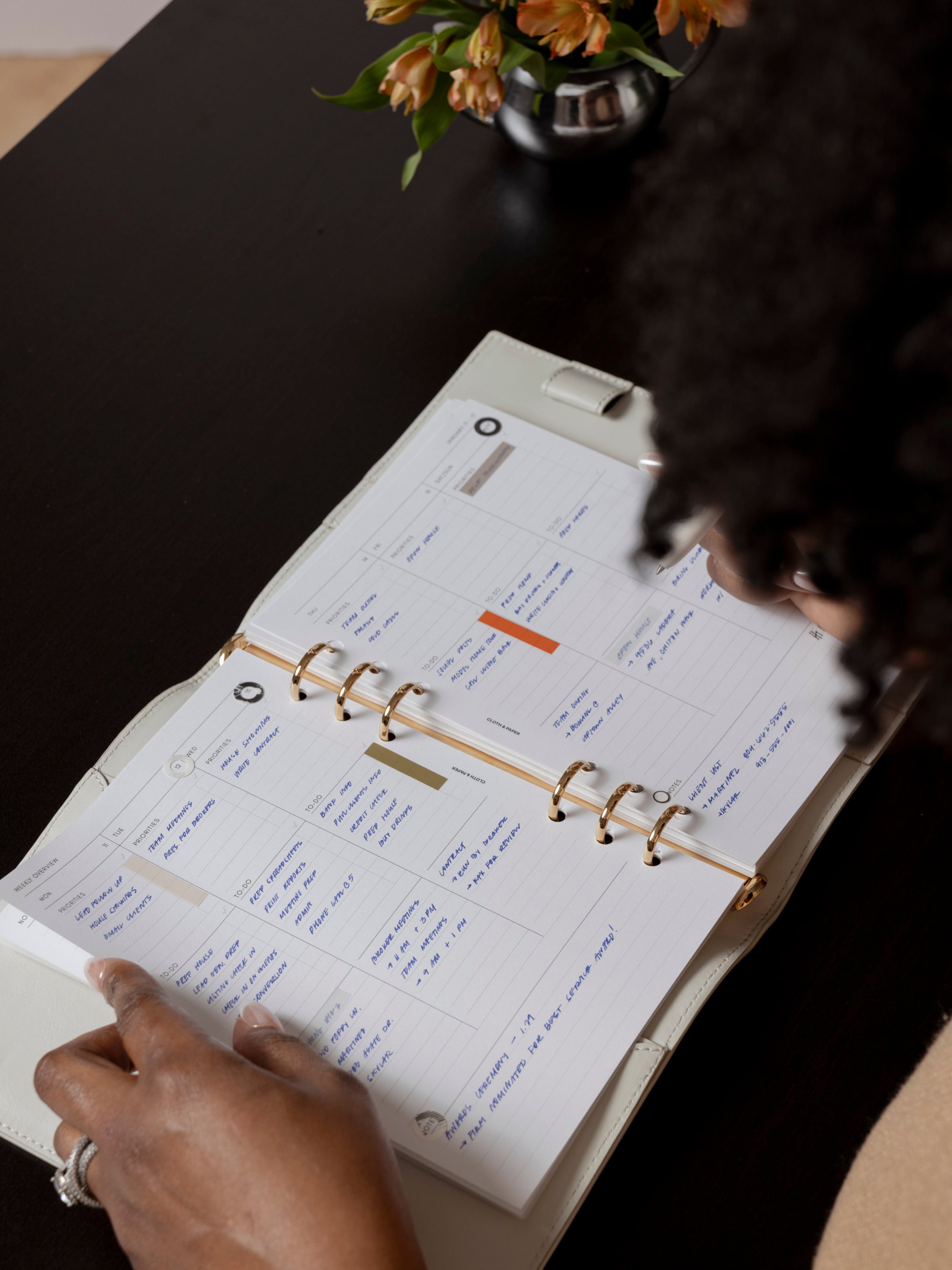
Once your menu is filled out, place it somewhere you will notice it. Tuck it into your planner, keep it in your notebook, tape it near your desk, or put it on the fridge if your household has accepted that stationery is part of the decor now.
You can also leave room to add to it later. Your dopamine menu does not have to be finished forever. It can change with your season, your schedule, your energy, and whatever version of yourself you are currently trying to cooperate with.
A good menu is flexible. Your brain is not the same every day, and your list does not have to be either.

Step 3: Make it when you feel good
This is the important part: make your dopamine menu when you are already feeling somewhat okay.
Not when you are overwhelmed. Not when you are in the middle of a motivation crisis. Not when you are lying on the floor wondering why one email has become a full-body event.
Make it when you have a little energy. Make it when you feel creative. Make it when pulling out your notebook, sticky notes, pens, and stickers sounds fun instead of like another obligation.
You are essentially leaving a note for a future version of yourself who may need help remembering what helps.

Visibility > Perfection
A dopamine menu is not for optimization or productivity at it’s core. You do not need to do more. What you need is visibility for your options so you can operate with intention. Sometimes you need pretty page that says, kindly but firmly: please do not let TikTok choose your coping mechanism today.
Start with one page. Add what works. Remove what does not.
Your brain is allowed to want a little joy and stimulation. Give it a menu.



1 comentario
Exactly what I needed to read this morning. This helps put thoughts and actions into perspective. Also helped me realize that I don’t make enough time for Entrees and that I don’t enjoy my Sides enough. I am spending too much time in Appetizers and Desserts, I’m living on dinner rolls and sweets, and my mind has been overwhelmed! This was good to read.
PortBlerd
Dejar un comentario
Este sitio está protegido por hCaptcha y se aplican la Política de privacidad de hCaptcha y los Términos del servicio.