The Everything Notebook Method: One Notebook to Rule Them All
I have never been good at keeping separate notebooks and planners for every part of my life. It sounds like a great idea when I am standing in front of a stack of empty notebooks and assigning each one a very specific purpose. In practice, the notebook I need is always in the other room, meeting notes end up on a loose sticky note, and an idea gets scribbled somewhere I will never think to look again. By the end of the week, I have written plenty of things down but cannot find any of it.
The problem was me. I convinced myself that everything needed it’s own space. I needed a planner for planning, a blank notebook for ideas, a small notebook for journaling, a separate pad for meeting notes and another place for a task list. I was delusional. My brain is not wired for that kind of stack. It gives information too many places to hide. Every new notebook I bought to “get organized” added one more place to search. If this struggle sounds familiar, let me introduce you to the everything notebook method.
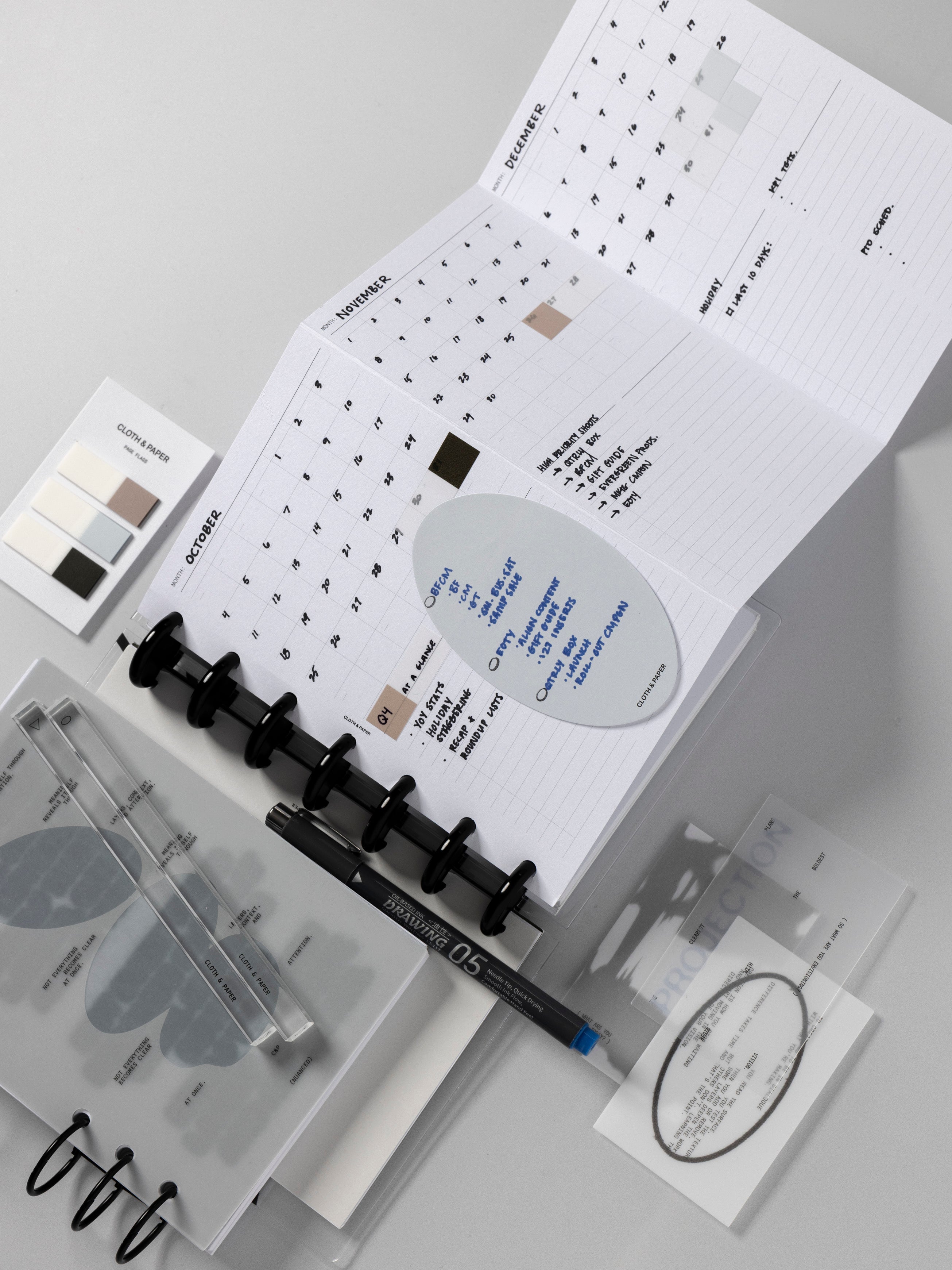
I’m using our new Five Subject Notebook as an everything notebook. You can use tabs in a smaller notebook or five little travel notebooks or whatever feels right for you! The important part is that each section has a job, but leave a little space to catch whatever comes up during the day. Here is how I structure mine.

1. Journaling
The first section is where I keep daily intentions, deep thoughts or little things that inspire me. I usually start with the date, then write a few lines about what I want to pay attention to that day or what has been taking up space in my head. Some entries fill a whole page, while others stop after a couple of sentences because that is all I had to say. I also copy down quotes or passages here when I know I will want to find them again.
I keep the definition of journaling loose on purpose because I do not want to classify every thought before I write it. A page does not need to become a formal morning routine or follow the structure of a gratitude log. Sometimes I want to record how a day felt, and sometimes I need a private place to work through something that keeps circling in my mind. Both belong in this section, and I can start writing without deciding what kind of entry I am making first.

2. Daily tasks
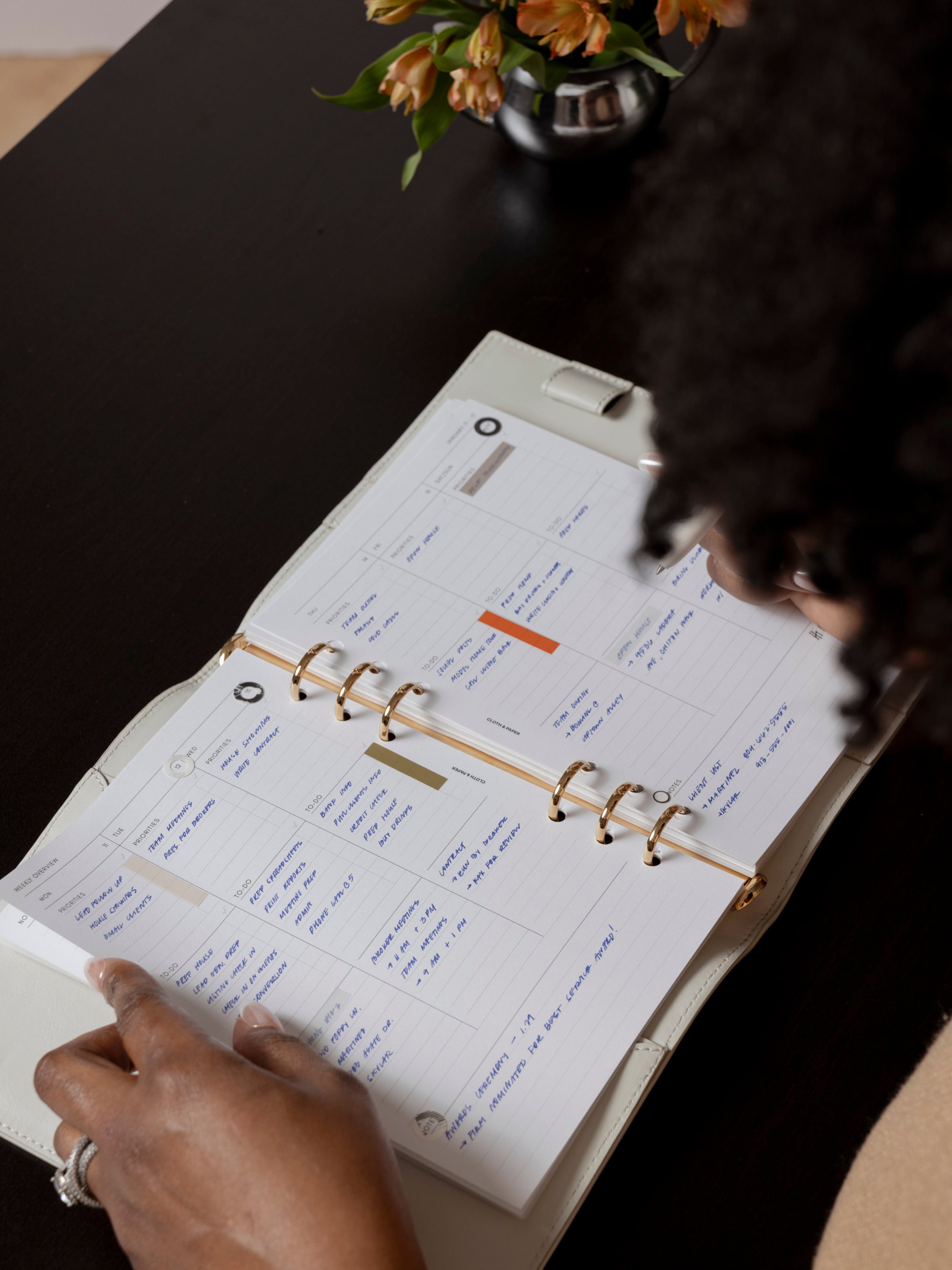
The second section holds the task lists I use throughout the day. I start a fresh list each morning and carry over anything unfinished after deciding whether it still needs my attention. Writing each task again makes me look at it instead of allowing it to sit unread inside an app for another week. The process also forces me to notice when I keep moving the same task forward without doing it.
These pages become a record of where my time went, which is often more useful than the schedule I made before the week started. When Friday arrives and I feel as if I accomplished nothing, I can flip back a few pages and see the work in front of me. I keep the format basic so it takes no effort to repeat: the date goes at the top, and each task gets the same checkbox. I can open the notebook in the morning and begin without setting up a new system for the day.

3. Meeting notes
Meetings have their own section because I return to these pages constantly. Each entry begins with the meeting name and date, which gives me enough information to find the conversation again later. I write down decisions as they happen and draw a box around any task assigned to me. When the meeting ends, I move those boxed tasks into my daily section so they do not disappear inside the notes.
Keeping every meeting together makes follow-up easier because I know exactly where to check before asking someone to repeat a decision. These pages also form a record of how a project changed over time without requiring me to create a separate project log. Earlier conversations stay in order, including ideas that were revised or abandoned after the next discussion. When I need to remember how we reached the current version, I can follow the project through the pages.

4. Things to remember
Some information matters even when it does not require action, so I reserve the fourth section for anything I may need to reference later. Book recommendations go here when someone mentions a title I want to read. I also use these pages for measurements, gift ideas, and dates that do not belong on my calendar yet. These are the small details I used to bury in a random phone note and then forget existed.
I treat this section as reference material so it does not become another task list. Anything that requires action moves into the daily section, while information I only need to recall can stay where I first recorded it. Once the pages begin to fill, I use the first page as a basic index and write each topic beside its page number. The index only has to make sense to me, which keeps it useful without creating another project to manage.

5. Brain dump
I keep most of the rules out of the final section because ideas rarely arrive in a useful order. A sentence may turn into a rough outline after I write it down, while a half-finished sketch may sit untouched for months before it connects to something else. I use these pages for content concepts and questions that I want to think through without deciding what they will become. Some ideas develop into real plans, and others remain exactly as I first wrote them.
I tend to lose an idea the moment I ask myself to organize it too early. Giving it a page lets me see what is there before I decide whether it deserves more attention. Once an idea becomes a project, I move its next step into my daily tasks and leave the original notes in place. I can return to the first version later without trying to reconstruct how the thought began.

Why one notebook works for me (and might for you)
My brain is naturally chaotic. I’m used to it but other people couldn’t last a day in this head. That means that I need tools that can flow with me. Instead of structure I have to fight against. Most of my thoughts notes in the middle of something else, which means I rarely have the correct notebook beside me when I need it. I remember a task while I am sitting in a meeting, or a sentence comes to me while I am planning tomorrow. A grocery item can turn into an idea for a whole project before I have even left the cereal aisle. If I wait until I find the notebook where that thought supposedly belongs, the thought is usually gone.
Keeping one notebook nearby gives me a place to write before the thought has time to become lost in the abyss. The subject dividers provide enough separation to keep the pages readable without turning the notebook into a filing system that I have to maintain. I can flip straight to my meeting notes without wading through last Tuesday’s journal entry, while my current task list stays out of the brain dump section. Before I put a pen to the page, I already know where the note belongs.
The only rule: keep using it
This notebook doesn’t need to be complicated or beautiful. It just needs to be useful. Date your pages, title anything you may need to find later, and move on.



Laat een reactie achter
Deze site wordt beschermd door hCaptcha en het privacybeleid en de servicevoorwaarden van hCaptcha zijn van toepassing.