Article: Dear Algorithm, I'm Busy
Dear Algorithm, I'm Busy
More people have been making room for hobbies that take them away from their screens. From gardening and journaling to foraging and crafting, these activities offer a chance to work with your hands, try something new, and enjoy a change of pace. For some, it's the satisfaction of making something from scratch. For others, it's simply nice to have something to look forward to that doesn't involve opening another app.
But going fully analog isn't simple. Not everyone has the support system or flexibility to step away completely. Between work, errands, and everything else that fills our days, finding time for offline activities can be easier said than done. Besides, the internet has plenty to offer, from learning a new skill to finding inspiration and keeping up with the people and things we love. Staying connected is part of everyday life, and there's nothing wrong with enjoying it.
So perhaps the question isn't whether we should spend less time online, but how we can make room for other interests alongside it. What is it about these activities that makes us want to return to them? And how can we find ways to enjoy them, even in the middle of our busiest days?
Table of Contents
Finding Joy in the Unexpected
Much of our digital lives revolve around what we see and hear. Analog hobbies, on the other hand, invite us to engage with the world around us in more ways.
Think of the weight of a ceramic mug in your hands, the earthy scent of potting soil, or the rhythmic click of knitting needles. These small sensory experiences make an activity feel more tangible and give us something to focus on beyond a screen. You can't simply scroll past a plant that needs watering or a dough that needs kneading. Sometimes, the enjoyment comes from seeing what you've made; other times, it's simply in the process of making it.
Perhaps that's part of what makes these activities so enjoyable. There's the satisfaction of seeing an idea take shape, the little surprises that come with trying something new, and the simple pleasure of being present for the process. Sometimes, the experience itself is just as rewarding as anything we might make from it.

A Few Things Worth Trying
Not all analog hobbies are the same, and not every day requires the same kind of energy. Instead of thinking of them as "good" or "bad," think of them by how much mental space they take up.
When You Need to Unwind
Sometimes you’re just mentally exhausted. You don’t want to learn anything new, and you just want the noise to stop. Re-reading a book you already love, listening to an album from start to finish without skipping, or taking a slow walk without a podcast in your ears. The goal here isn’t to achieve anything, it’s just to let your brain rest.
- Stationery Swatch Collection: Create your own reference book of stationery colors, patterns, and textures. Test different fountain pen inks, sample washi tapes, and arrange them in a notebook or swatch cards.
- The "Photo Dump" Album: Instead of editing 50 photos for Instagram, just print 10–20 raw, unedited photos from your gallery to create a physical album of moments.
- Adult Coloring or Paint-by-Numbers: You don’t have to decide what to draw; you just fill in the lines. It’s incredibly soothing for an overactive brain.
- Start a commonplace book: Copy favorite quotes, interesting words, or little observations into a notebook.
When You Want to Engage
Other times, you have a bit more energy. You want to do something, but you don’t want the constant influx of input. This is the sweet spot for journaling with prompts, letter writing, or scrapbooking. It’s focused and expressive, but it doesn’t demand that you keep up with the latest trend.
- List of Little Things: Start a collection of things you love, ideas you'd like to explore, places you want to visit, or little details you don't want to forget.
- Puzzle Solving: Jigsaw puzzles, crosswords, or Sudoku. They have a clear right answer, which is a nice break from the ambiguity of life.
- Hand-Lettering or Calligraphy: Practicing how to write beautiful letters. It requires focus but is very meditative.
When You’re Ready to Create
Then there are days when you’re looking for novelty. You want to experiment, move your hands, and try something new. This might be learning an instrument, developing a short film, or starting a project. It’s about vision, discovery and challenge.
- Creative Translation: Choose a favorite poem, song, or short passage in another language and try translating it into your own.
- Faux Postage: Create your own collection of decorative postage stamps using paper scraps, illustrations, photographs, and craft punches.
- Storyboard Journal: Turn your favorite songs, stories, or everyday moments into a series of illustrated frames.
- Creative Taxonomy: Invent your own categories and systems for organizing unusual things, like types of rainy days or personalities of flowers.
Somewhere Between Here and There
Sometimes, the hardest part of starting a hobby isn't finding the time or even knowing what you want to do. It's getting everything ready. You might want to read, journal, or work on a little creative project, but if your supplies are tucked away in a drawer or your book is sitting on a shelf in another room, it's easy to put it off and reach for whatever is already within reach.
One way to make these activities easier to return to is to give them a place in your everyday surroundings. It doesn't have to be an elaborate setup or a dedicated hobby room. A small reading nook, a basket of craft supplies beside your favorite chair, or an open notebook on your desk can be enough to remind you of the things you'd like to spend time doing.
You can also make a habit of bringing your interests along with you. Keep a book in your everyday bag for moments when you're waiting for an appointment, carry a small notebook for ideas and observations, or bring a few stationery supplies when you know you'll have some downtime. Having these things nearby makes it easier to pick up an activity without having to plan an entire afternoon around it.
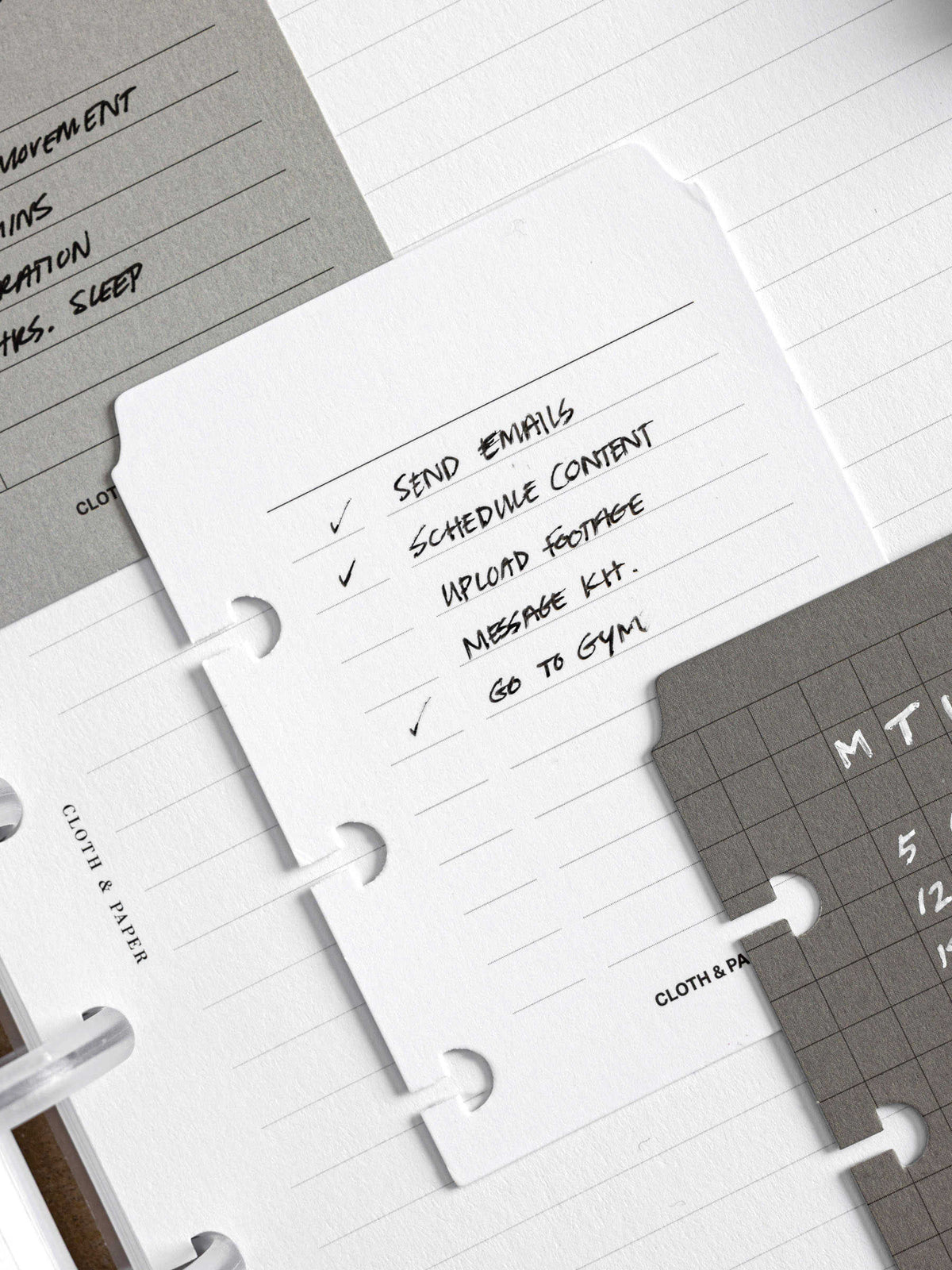
Another thing to consider is to give leisure time a little space in your planner and calendar, too. Rather than simply filling the empty spaces between appointments and responsibilities, try setting aside time for something you genuinely enjoy.
The idea is to reduce the distance between wanting to do something and actually getting started. When the things you enjoy are already within reach, you're more likely to find little opportunities to spend time with them throughout the day.

If you've made it this far, we hope you've found at least one thing that caught your interest or reminded you of something you've been meaning to try. Not everything needs to become a regular practice or a lifelong interest. Sometimes, it's enough to have found something that made an ordinary afternoon a little more interesting.
There are so many ways to spend our time, and we hope you find something among them that gives you a reason to look forward to a little time away from your usual routine. And if you happen to come back to this article later, perhaps you'll discover another idea worth exploring.
Whatever catches your curiosity next, we hope you have fun with it. Until then, happy discovering!


Leave a comment
இந்தத் தளம் hCaptcha-ஆல் பாதுகாக்கப்படுகிறது, மேலும் hCaptcha தனியுரிமைக் கொள்கை மற்றும் சேவை விதிமுறைகள் பொருந்தும்.